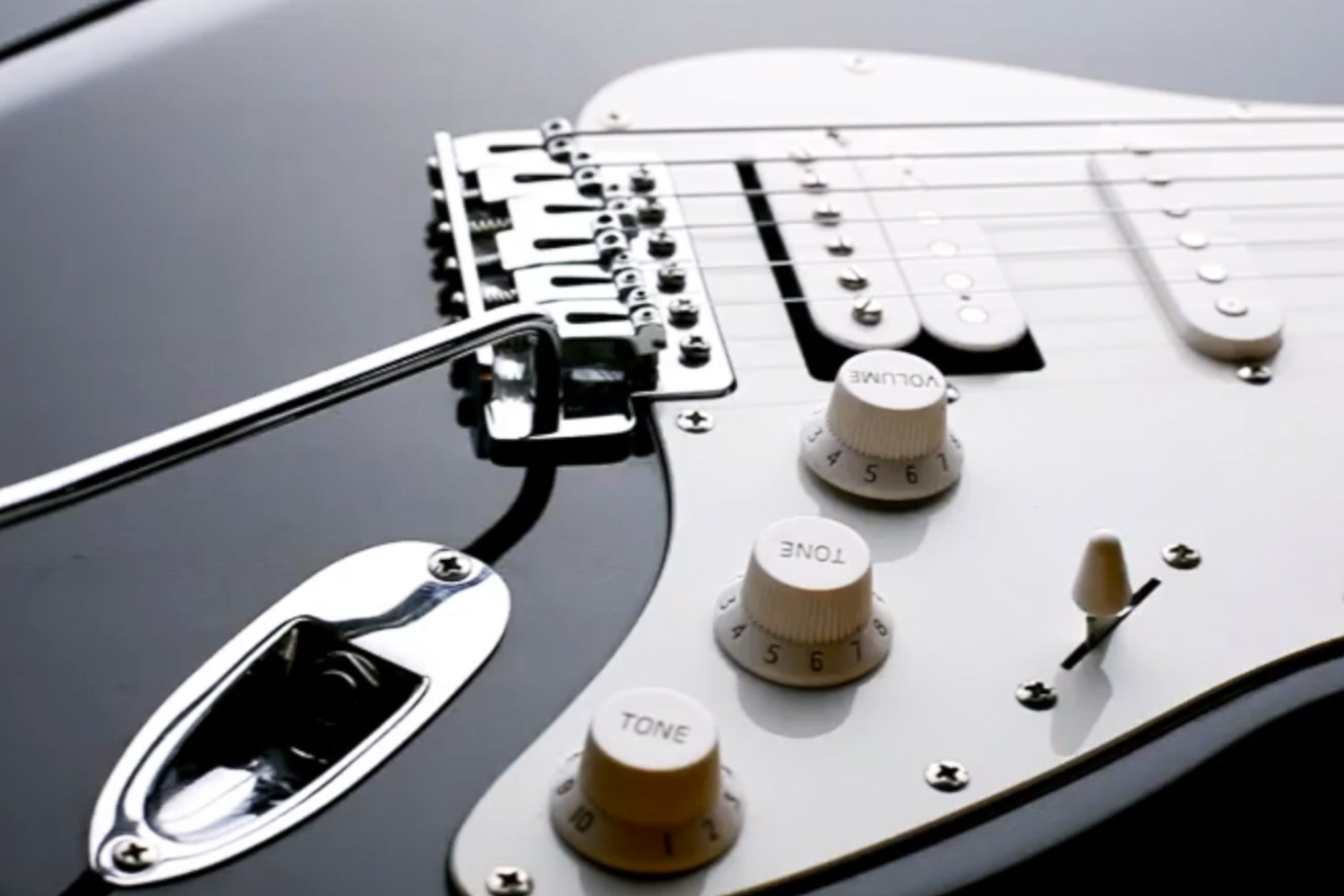
There are moments when a brand can be legally right and still lose the emotional argument. That may be the real lesson behind the latest Fender Stratocaster dispute.
In March 2026, Fender announced what it described as a landmark legal ruling in Germany protecting the Stratocaster body design. The case involved guitars sold through AliExpress by Chinese-based Yiwu Philharmonic Musical Instruments Co. The Düsseldorf court found that the guitars unlawfully reproduced the Stratocaster body and that the design qualified as a protected work of applied art under German and European law.
Read the UK Music Industries Association report on Fender’s German legal ruling here.
On one level, Fender’s position is completely understandable. The Stratocaster is not just another product shape. It is one of the most recognisable designs in popular music. It carries decades of sound, memory, performance, image and emotion. For Fender, it’s a valuable commercial asset. For players, collectors and fans, it is something much more personal.
That is where the brand risk begins.
Fender has sent cease-and-desist letters to guitar makers producing Stratocaster-style instruments. Some of those makers are not anonymous copy factories. They include boutique builders and specialist businesses that many guitar players see as part of the same culture that made Fender iconic in the first place.
Read the Guitar.com report on the wider industry reaction here.
This is no longer just a legal story. It’s now a brand story. And brand stories are judged by different rules.
A court may ask whether Fender has a valid claim over a design. The market asks something more instinctive. Is Fender behaving like a confident market leader? Is it protecting originality, quality and heritage? Or is it trying to control a category that has grown around it for more than 70 years?
That distinction matters because Fender is not a normal company selling a normal product. It is a cultural brand. Its products are used to express identity, not just make sound. That gives Fender huge power, but it also creates a higher expectation.
The bigger a brand becomes, the more carefully it has to use its power. People do not expect iconic brands to behave like anxious brands. They expect confidence. They expect generosity. They expect stewardship. They expect the brand to understand the world it helped create.
That’s why the Tesla comparison lands.
Tesla did not become more polarising simply because people changed their minds about electric cars. It became more polarising because the behaviour around the brand started to change how people felt about the product. The technology, the leadership, the culture and the public mood became harder to separate.
Fender is not Tesla. But the reputational risk is similar. A loved brand can become a resented brand when people begin to feel that its power is being used against the very community that made it matter.
If you’re ready to explore how we can move your brand play louder and more powerfully, start a conversation with us today.
Watch the Brand Sprints video below